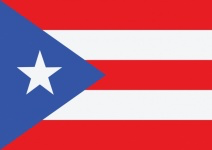
A week from today, I’ll be boarding a plane to Puerto Rico to observe and document what I see and the people I meet, to attempt to display a clearer picture of what Puerto Rico and its people are doing and how they’re responding to the effects of disaster aftermaths. I’m reflecting upon what it means to recover from a disaster in the mainland USA and what that means for a territory of the United States.
This is a topic that has been in my mind for years now; I lived through Hurricane Maria and itsaftermath, and then joined the exodus to the United States—a kind of internal climate refugee—returning to the mainland where I was born. As the child of a African American father and an island-born Puerto Rican mother, my early childhood was spent on the mainland, while my youth and young-adulthood were spent on the island. As a profoundly Diaporican, what do all these experiences mean? What do these experiences reveal about the state and future of the island I love so much? What have the states of crisis brought upon by events such as Hurricane Maria and Hurricane Fiona say about the status of Puerto Rico and its relationship to the US? What do Puerto Ricans have to say about it all?
I’m asking all these questions and I’m posing them to my reader as both rhetorical (I can give answers addressing the implications of these questions from the perspective of a Puerto Ricanwho has experienced one of these crisis first-hand) and genuine questions (I understand these questions are deep and complicated and require a look into history, politics, societal structures, economy and much more, then reflection upon how these things work together to create Puerto Rico today) to anyone who’ll listen, if that makes any sense.
Starting this blog, I want to give some information to my readers in regards to the challenges Puerto Rico faces. These are important points to have in mind moving forward in order to understand what it is Puerto Ricans and the island are trying to address and confront as a people.For this blog, one of the main sources I’ll be using is the book Aftershocks of Disaster: Puerto Rico Before and After the Storm edited by Yarimar Bonilla and Marisol LeBrón, recommended to me by my project adviser Dr. Lorna Perez. The book explores Puerto Rico after Hurricane Maria and addresses the political, economic, and systemic factors that turned Maria’s aftermath into the tragedy it was and explores the responses and effects upon Puerto Ricans in the island and diaspora. It shines a light upon Puerto Rican scholars, activists, and community leaders and their efforts to to enact change as well. In regards to the information I’m going to provide in this blogentry, I will be taking and quoting from the book’s foreword provided by Arcadio Díaz-Quiñones. He perfectly illustrates and explains the reality brought into focus as a result of Mariain a way that’s clear and realistic.
When trying to understand the challenges Puerto Rico faces, it’s important to remember that these challenges are not the products of recent legislation and policies exclusively. They’re the result of centuries of colonization, beginning with Spain’s colonial rule over the island and the military occupation of the United States in 1898. That’s a lot, to put it lightly. As Díaz-Quiñonesstates in his foreword, the realities constructed by this colonial rule and state have historically been repressed, “History seems to have been erased from memory”.
He then explains how the state of crisis brought upon by Maria served to reveal the true depths of the damage caused by colonization and the island’s status under American forces. These include:extreme social inequalities, the defunding of public education, and the complicity of specific local Puerto Rican economic and political actors with neoliberal policies, the presence of a powerful and racist imperial state which represses radical Puerto Rican voices (x).
There is a constant denial exercised by the federal US government and specific local political actors and/or figures in regards to the fact that Puerto Rico has never had full control of its economic, environmental, and communications policies. One of the most recent examples of this reality is found in the enacting of the Financial Control and Management Board Stability Act (referred to as PROMESA in PR) by the US Congress in 2016. With this came the imposition of a board, commonly referred to on the island as La Junta, a board of eight appointed members, initially appointed by President Obama, which dictates how funds are to be managed and distributed on the island as a response to Puerto Rico’s debt crisis. These appointed officials haveindeed cut costs for the island…by slashing funds for education, healthcare, minimum wage,pensions, and various social services.
Díaz-Quiñones also expresses how the Hurricane Maria brought upon a new understanding and ways to view identity for Puerto Ricans; results of the undeniable issues brought to the fore,which were previously mentioned and the mass exodus of Puerto Ricans following the hurricane, forcing the presence of new conversations in regards to the diaspora. He posed questions in his foreword in regards to this mass exodus which I feel must be shared here:
• What are the gains and losses of leaving?
• What challenges lie ahead for those who remain behind?
• Are their voices weakened or strengthened?
As I read through this, I couldn’t help but reflect and think about what this event marked for me as a Puerto Rican. There is no denying that Maria marked a before and after in the collective consciousness of Puerto Ricans. The passing of Hurricane Fiona can only be viewed in relation to the precedents established by the events of Maria because of the revelatory nature of these events. I was 17, but I say with full confidence it was one of my before and after points in life, I think one of my clearest ones. I was always aware that to be American in the mainland was not the same as an American born in the territories, I was always aware of the socio-economic disparities between the two since a young age, the challenges that the status of the island creates and the devastating effects its had on Puerto Rican communities. But, it wasn’t until Hurricane Maria that the reality of this condition sunk in, that I finally really understood what this really means and what it can really do to people’s lives. It wasn’t until I looked around at the destruction surrounding me, the inaccessibility of the most crucial of items like food or water, the labyrinth a citizen must cross for the access of the most basic of services in times of crisis,the federal and local government nowhere to be found, communities struggling to survive lifting each other up because nobody was coming, the state of chaos, the uncertainty of what was really happening, the suffering of quite literally an entire country, that I really understood what it means to be a US citizen that’s Puerto Rican. To be aware of something existing doesn’t mean you understand it. I thought I knew, I think a lot of us thought we knew how far the effects of colonization and occupation go, but it was that event that opened many of our eyes to how deep it really runs in our lives.
A shift in identity happened in that event, a new consciousness sprung from it. I can’t help but notice a new mode of thinking since then. The young generation became extremely active inpolitical and social affairs, the political scene has changed in notable ways since then, I believe feelings of community strengthened, and I feel a renewed pride present in the community when it identifies as Puerto Rican or Boricua. I can’t put it into words at this moment (maybe by the end of this project I’ll be able to), but it feels different now. There’s not more weight to it, just a different kind of weight. There’s always been a great sense of pride and strength in being Puerto Rican and the identity, but the events of Maria seem to be like a kind of awakening; it’s I’m proud to be here, keeping my culture alive, making a stand for my community, as a fighter and as a survivor, I want better for my community. No matter what comes our way as a people, we are still together, rather we be on the island, the US, another country, or en la luna.
NOTE: If you would like some more context in regards to what’s going on with la junta and get some perspectives from Puerto Ricans, Vice News has an interesting and brief article from the Ricky Renuncia protests from the summer of 2019 titled “Puerto Ricans Are Not Done Protesting. “La Junta” is Why” by Alex Lubben. The article includes clips from the protest, commentary from Puerto Ricans in regards to la junta and a brief history and explanation of this board. The article includes statements by Aftershocks editor, Yarimar Bonilla.


 Puertorriqueña en exilio
Leave a comment