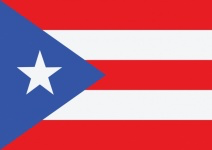
I’m writing this while I’m currently on the plane to Aguadilla, PR. While here, I’ve been reading Aftershocks of Disaster. Reading through it coupled with me reflecting upon the nature of this trip has led me to deciding to write this entry.
Throughout the entirety of last week, I was attempting to write down a recount of my experience with Hurricane Maria for an entry. Each and every time I would sit down to write my entry in my journal though, I would have to stop. I knew what I had to say, I knew what there is to tell, but the words just wouldn’t come out, more specifically, they just weren’t coming out “right”, if that makes sense. I couldn’t understand why it just wasn’t happening, why it was like I couldn’t bring myself to write this. I feel a desperate need to finally get it out of my system, to finally allow the events to flow out of my body and release. The truth is, I’ve been attempting this since September 20th, 2017 and reading through Aftershocks has made me reach the decision to write about this, not as a linear easy to follow narrative, but relaying it in this brute, fragmented manner, because frankly, “fragmented” may be one of the best descriptors of the experience.
Aftershocks is not wrong in stating that the events that transpired through the disaster of Hurricane Maria are “unnameable”. Maybe to better grasp why that word can be used, one can remember the official death toll: 2,975. To that death toll I respond, “and counting”. What adds to making this amount so “unnameable” is the truth behind the nature of the lives lost. While of course there were those who lost their lives during the Hurricane, a great deal of these deaths were the results of structural failures and negligence. Directly quoting from Aftershocks, these causes can be attributed to: uncleared roads that did not allow ambulances to arrive, lack of water distribution that led residents to contaminated water sources, lack of generators in hospitals, and more than half a year without electricity to power medical equipment, refrigerate lifesaving medications such as insulin, and provide public lighting and traffic lights to prevent deadly accidents. Besides these structural issues and issues concerning the physical health of residents, a mental health crisis also ensued. Suicide rates increased by 28% in 2017. Alongside all these factors, reports of domestic violence and intimacy abuse spiked.
Many were the times when I would get home with my family after spending the day in search of food, water, and gasoline to no success, many were the times coming home from being out aiding in affected communities that I would sit down to cry feeling at times helpless in the face of so much suffering and uncertainty, many were the times we came across elderly people struggling to recognize the drastically changed landscape post-Maria, and many were the times we interacted with struggling mothers scrambling to provide for their children, rather it be because of lack of access to food and water, or lack of a roof over their heads. It’s an eye-opening experience for a 17 year old. There was an overwhelming feeling of abandonment from both the local and federal government and we as communities unified under a sense of duty to restore and take care of each other while having in mind “nobody’s coming, we need to do this ourselves”. While working as aid, there were many times we arrived to help in communities where not a single government official, local or federal, had gone to assist. If not, we heard of other groups who had arrived first, before any government official. In many of these cases, it would be months after the arrival of these groups before any official would appear. In my own neighborhood, it had been 3 months before a single government official showed up. By then, we as a community had cleared the roads (if we hadn’t done that we would have been trapped), had shared our food and water with each other to pool in our resources, and many had already chosen to leave the area, rather it be to another area in PR closer to family members, or they had joined the mass exodus to the mainland. Keep in mind, location in this conversation is important. We managed to do this in my neighborhood because we weren’t in a place accessible only through bridges (many communities were stranded because all bridges connecting them to roads were destroyed), and we weren’t in a place that was a distant rural area where the mountain landscape made road conditions too difficult and/or dangerous to access and clear up.
Sitting here in this plane, reading Aftershocks and reflecting upon the nature of this trip produces a strange sensation. When reading Aftershocks, its highly detailed and accurate depictions of Maria, I can’t help but realize, I, along with my family and friends, are the people this book is describing; all the way from the experiences attached to this event, to the realities we who have needed to leave PR are confronting. Sitting here in this plane, on my way to attempt to make sense of the effects and realities of this disaster, I go back to the memory of my plane ride back to the mainland after Maria. The brokenness in the air of that plane. I think it’s a known thing in PR that we tend to be lighthearted on plane rides, clapping when we reach our destination (clapping and cheering the loudest when the plane lands in PR), but that plane ride was different. The air was heavy and the plane was quiet. Unlike most people I know, it’s not the sensation of the plane finally hitting the ground that’s my favorite, it’s the sensation of the plane lifting up off the ground that I love. But on that occasion, it felt like at take off, a piece of me was left behind. Though I was born in the mainland, after Maria, at times it feels like I’m in exile in my own nation, grieving my other.
I’m in my aunt’s house now, the roosters are crowing and the dogs howling, a usual morning. Getting off the plane, the air was so much hotter than the 33 degrees I left behind a few hours ago, but it felt natural and it just felt right. It was refreshing to see all the families coming off my plane and running to embrace their families waiting for them. My cousin was waiting for me outside and said “I knew it was you when I saw you walking.”


 Puertorriqueña en exilio
Leave a comment