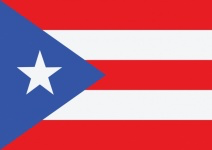
Moving forward this week, we’ll be looking at the experiences lived during aftermaths in Puerto Rico: what are common occurrences, struggles, and pressures. As I’ve been reading and speaking with people, the more I’ve come to the point of believing that one can not talk about these experiences without looking at the historical, political, and economic factors which have led Puerto Rico to this point. The experiences lived during these times of crisis can seem inconceivable to those outside of Puerto Rico and so a degree of understanding of what creates these dynamics is necessary.
- The invasion of the United States in 1898: Prior to the invasion, Puerto Rico was a colony under Spain. The US entered as a result of the Spanish American War and took over the island.
- The Foraker Act of 1900: Introduced by Joseph Foraker in January 1900, it’s the first time Puerto Rico is defined as a territory under the US. Puerto Rico is referred to as an “unorganized territory” and was given limited (very limited) self governance. The act established the colonial rule of the US over PR. The governor was to be appointed by the US alongside an 11 member executive council which was almost entirely appointed by the US. There was a 35 member legislature which was popularly elected every two years but it’s authority was severely undermined by the executive council which had unchecked veto power. The act provided Puerto Ricans with the “protection of the United States” as long as they declared their allegiance but did not provide citizenship.
- The Jones-Shafroth Act of 1917: Named after the two legislators that sponsored the act, William Jones and John Shafroth and signed into law by President Woodrow Wilson, it’s the act that provides Puerto Ricans with citizenship. Though this is probably the primary difference between this and the former Foraker Act, it did (very lightly) restructure the governmental system of Puerto Rico. The popularly elected legislature was now comprised of 39 members and a senate comprised of 19 members was created. Congress still remained able to annul and amend bills. 6 major government departments had to be appointed by the president with the consent of the territorial senate but the attorney general and the commissioner of education was appointed solely by the president. This act was primarily enacted in order to secure military support for the construction of the Panama Canal from German U-boats, utilizing Puerto Rico as a strategic point in the Caribbean.
- Section 27 of the Merchant Marine Act of 1920, the Jones Act of 1920: It requires that any cargo traveling by sea between 2 American owned ports or owned by US-based companies with 75% of ownership stake held by US citizens must sail on an American-owned ship which is American built in the US with a majority crew of US citizens. This act boosts the cost of shipping for Puerto Rico and Hawaii.
- Law 600 of 1950: Established the Estado Libre Asociado (ELA), in other words, created the commonwealth. It allowed for the crafting of the constitution of Puerto Rico and allowed for Puerto Rico to take control of its internal governance. Side comment in regards to this: Today, amongst the population, there’s a tension between the younger generations who want change and the older generations who are either very keen on keeping the ELA or very keen on becoming a state, with not many of the older generation openly supporting independence. It’s been a common thing for years that older generations have very consistently only wanted to vote for the political parties that stand for these two options, leading to a heavy bipartisan dynamic in Puerto Rico despite the existence of other options for years. A lot of this is the result of a sense of loyalty. Puerto Rico, prior to the establishment of the ELA, was one of the Caribbean countries with the highest poverty rates. The people who were alive during the establishment of the ELA lived through the sudden and rapid industrialization of PR and a sudden drastic improvement in their living conditions and accessibility to opportunities in the island or in the mainland. As a result, the ELA and the US was associated with progress and better living conditions and for years, older generations who lived through this shift have hung on to these two political options, regardless of the effects upon PR. Though this has for many years been a point for frustration amongst younger generations seeking change, I understand where the older generation is coming from. But even then, there’s no denying the realities being lived. There’s no denying the very needed good, short-term effects of its establishment, but there’s also no denying the blaring negatives of its long-term presence.
- The Puerto Rico Oversight, Management, and Economic Stability Act of 2016 (PROMESA): Signed into law by President Barack Obama, in order to establish the Fiscal Control Board, colloquially referred to as La Junta by Puerto Ricans which is comprised of 7 appointed/unelected members, 6 of which are appointed by the president of the US and 1 by the governor of PR (per La Junta’s page). This board manages local finances with the purpose of being able to pay off Puerto Rico’s debt. La Junta has near full control of how finances are managed in Puerto Rico with no form of local accountability. Its methods for paying off the debt have been through the imposition of structural-adjustment style austerity measures, one of its first targets being public education and the drastic slashing of pensions and wages. This board was imposed due to Puerto Rico’s status as neither a state or independent nation not allowing for it to refinance or default on its debt.
While living in Puerto Rico, I saw the effect of all these acts along with the peoples’ responses to them. One of the most prominent memories I have is Puerto Rico’s reaction to PROMESA. It was viewed as the definitive death of the ELA and the definitive end of what many Puerto Ricans for years viewed as the illusion of self-governance. The country was deep in debt due to its status as a commonwealth, unable to establish trade with other nations, and was denied a chance to refinance or default on it due to its status, and now, the creation of La Junta rendered our government totally powerless in the eyes of many, under full control of the US. During these times, people protested by holding symbolic funerals for the ELA, carrying homemade coffins with ELA written on them being taken for burial (Aftershocks recounts these protests which I found interesting to see included).
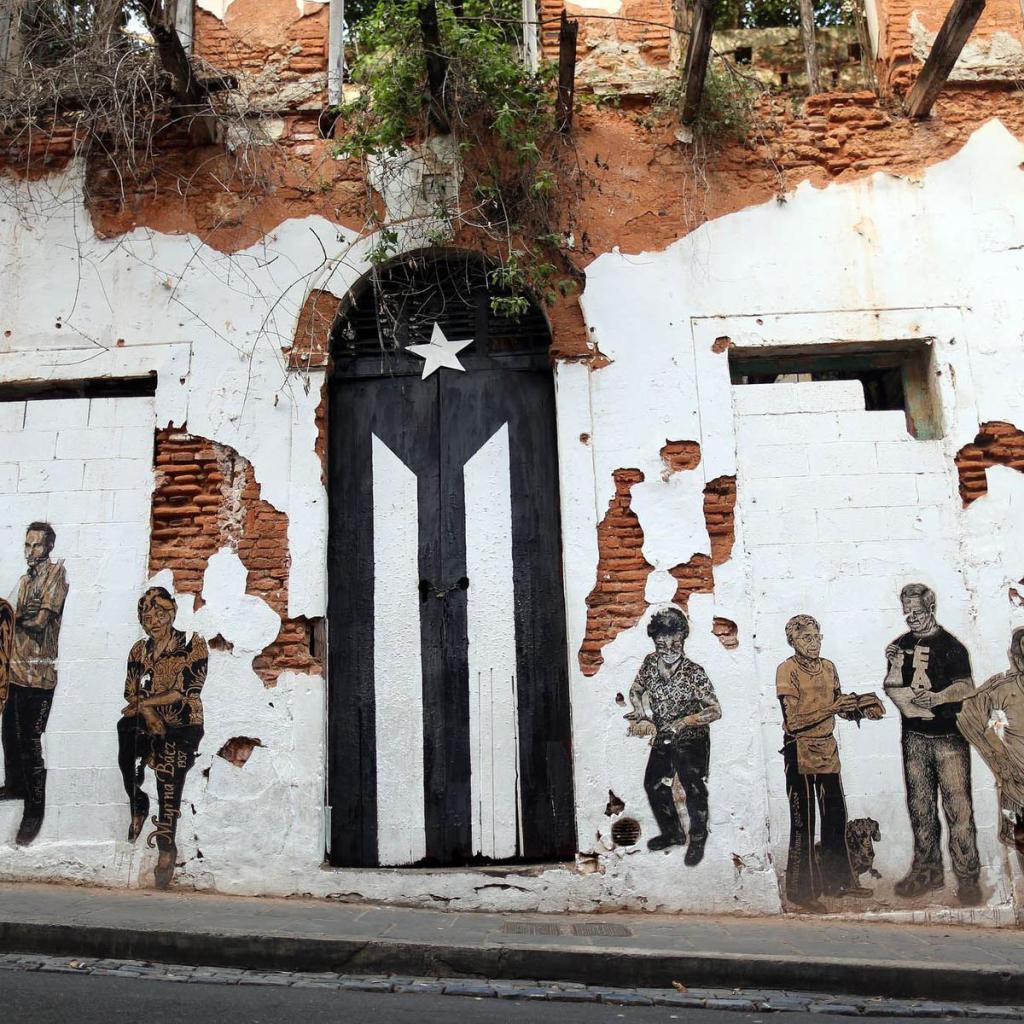
One of the most prominent thing to emerge from this time, is the emergence of the black Puerto Rican flag. The flag in Puerto Rico is surrounded by the utmost respect for it, a marker of our pride as a people, something going further than nationality. The flag in its official state or its former state, stands as an inherently subversive symbol for Puerto Ricans (having a PR flag was illegal from 1948-1957, result of the Gag Law passed by the US appointed PR governor of the time). The flag is considered something that is to be viewed with reverence and this act of painting it black came as a shock and a powerful symbol. The door in the picture is a popular spot in Old San Juan to take pictures; originally painted with the light red and blue of the PR flag. On July 4th, the Independence Day of the US, the original artists of the famous door painted it black in response to PROMESA being passed. The statement? Estamos de luto (we are in mourning). From that point forward, it has become a symbol of protest in PR and in the diaspora. I still remember the impression this event left upon a teenage me. I greatly admire the artists that made this statement.
Other ways I saw the impacts of these acts was through the constant protests held in all Universidad de Puerto Rico campuses. Due to La Junta’s constant targeting of funds for public education, campuses have seen themselves at dire risk through increasing tuitions, pension cuts, or constant threats of closing various campuses or the elimination of entire programs. For years, students, staff, and faculty alike have been consistently protesting, keeping the UPR a reality.
The Jones Act is one of the most obvious ways I saw the negative impacts of these acts in my life as a resident of Puerto Rico and later seeing it through the eyes of the diaspora. The constant, ever increasing prices of products while wages shrunk, during Maria, the crisis and panic to not really afford food, but to be able to find food. The inability of receiving goods from other nations left Puerto Rico unable to supply food for stores for many weeks due to ports in the US also being affected by the passing of Irma and Maria along the mainland’s coast. For Fiona’s aftermath, a non-US flagged ship with resources was stuck at the ports for days because of the Jones Act until the Biden administration decided to pass a waiver for a few hours while resources were unloaded. Keep in mind, this ship was at shore unable to unload these critical resources, such as fuel, to power generators needed for the functioning of critical facilities and/or services in recovery efforts, because of the Jones Act; all this while a humanitarian crisis unfolded once again in Puerto Rico.
Puerto Rico’s debt is also made worse through a series of events which have left the country with major damages which have had devastating effects on lives and the economy: Hurricanes Irma and Maria, the earthquakes of 2019, COVID19, and Hurricane Fiona. Also put into perspective the timeframes of these events: 2017, 2019, 2020, 2022.
If you would like to continue reading up on these subjects, I’ve provided the links that informed me for this entry. These pages provide a great deal of information and historical details. Information regarding PROMESA was taken from Aftershocks.
https://history.house.gov/Exhibitions-and-Publications/HAIC/Historical-Essays/Foreign-Domestic/Puerto-Rico/#:~:text=Beginning%20as%20H.R.,in%20the%20early%2020th%20century.
https://law.justia.com/codes/puerto-rico/2020/titulo-22/capitulo-11/194/
https://www.investopedia.com/terms/j/jonesact.asp#toc-what-is-the-jones-act (not a source like the others provided, but I found this one to be the most accessible explanation for the Jones Act of 1920 amongst the various places I looked in)
If you would like to read up on the flag’s history all the way up to Puerto Rico’s Resistance flag, Justin Agrelo has a great article titled “How a Change of Color for the Puerto Rican Flag Became a Symbol of Resistance” in Mother Jones. https://www.motherjones.com/media/2019/07/puerto-rico-resistance-flag-black-and-white-flag-san-juan-la-puerta-colonial/

 Puertorriqueña en exilio
Leave a comment