WARNING/TRIGGER WARNING: This post has explicit language. Racial slurs in this post are not censored.
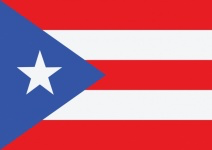
Racism, particularly anti-Black racism in Puerto Rico, is a difficult subject. It’s difficult to speak about and speak within Puerto Rico and its communities because of Puerto Rico’s constant denial that it even exists; such is the case with many Latin American cultures. This post focuses on racism, anti-Black racism and my experiences with these things, specifically within the context of residing in Puerto Rico, the archipelago. While I was reading through various sources and reflecting upon my own experiences with anti-Black racism in Puerto Rico, I realized we are in need of a full language and framework in order to be able to address this dire problem. It dawned on me that we don’t even have an actual word for “slur” in Spanish (Puerto Rico, I don’t know if maybe other Spanish speaking countries do). Because we Afro-Boricuas are constantly being denied our realities struggling with anti-Black racism, we find ourselves in the constant need to “prove” it’s happening and reaffirm our identities and positions in Puerto Rico and as Puerto Ricans.
I realize now that when I began preparing for this topic, I was coming in trying to prove it. I am not saying this is a bad thing, I believe this is a totally valid response to the discrimination we constantly face. Crucial work has been produced addressing this, showcasing how this looks, when and where it happens, and centralizing the real lived experiences of Afro-Boricuas in Puerto Rican society and communities. We have mainly been explaining it, saying “because this, this follows”. I believe that, in order to reach the next level, to make this reality and an undeniable truth, we need to map out the racist system itself and speak to how it functions in Puerto Rico specifically and why it functions the way it does. We need to address the “why of the how”. I believe Puerto Rico’s particular iteration of these problems are wholly unique to Puerto Rico and very complicated.
With all this being said, I will now proceed to “prove it”. Before we start addressing these more complex ways in which racism and anti-Black racism is manifesting in Puerto Rico, we need to say “this is what it looks like”, we need to remind people that the victims of these complexities are human beings having their lives shaped by Puerto Rican society’s prejudice. We Afro-Boricuas need spaces where we can speak our truth and reject the constant gaslighting we are subjected to. If the very basis of our continued struggle is the denial that it even exists, unfortunately, we do indeed need to continue to make spaces where we continue to “prove it”. Both approaches I’m speaking about are needed, the theoretical aspect of our experiences and the “practiced” aspect of our experiences. No house is built utilizing one tool. If we are to make our home, we need to use all the tools to make it a sturdy place.
As previously mentioned, the biggest issue we as Afro-Boricuas face is Puerto Rico’s constant denial that we are discriminated against in the first place. What does that mean? Puerto Rican society functions off of the narrative that Puerto Rico has and sees no race, all Puerto Ricans are “mixed”, therefore, there is no racism in Puerto Rico; racism, particularly anti-Black racism, is considered something that ended with abolition and that Americans (US) engage in and is only possible within an American cultural context. Anaïs Duplan is a trans*, poet, curator, and artist, professor of post-colonial literature at Bennington College, and has taught poetry at various colleges, addresses the concept of narrative and the act of “remembering together” in his book Blackspace: On the Poetics of an Afrofuture. I love his simple and insightful definitions of these two things. I believe they’re very effective in framing the challenge that Afro-Boricuas are facing.
Anaïs Duplan defines narrative as “both an aesthetic and political tool, wielded by agents who hold power to produce some felt effect in a reader – or in a colonial subject – (Duplan 4)”. When referring to “remembering together”, he is referring to the act of “turning to history for lessons that we hope will guide us through the present moment (Duplan 3)”. The felt effect of Puerto Rico’s narrative is the suppression of Afro-Boricua voices and experiences within a system that is hostile towards Afro-Boricuas. When Puerto Ricans “remember”, we do not “remember together”. Where some Puerto Ricans remember the abolition of slavery as the end of all anti-Black racism, others remember it as the end of bondage and the beginning of “unfreedom”. Duplan provides excellent and thought-provoking definitions and differentiations between bondage and being unfree in a society as well.
“All marginalized people inhabit two worlds at the same time: those of freedom and nonfreedom. Being unfree is different than being in bondage. In bondage, as in the case of enslavement, one’s body is owned by someone else. Being unfree, on the other hand, is what happens after the end of enslavement: one becomes an ‘emancipated’ citizen in the society that used to enslave her and that is built to do so – without a literal title on one’s body, but still with the power to destroy that body, threaten it, circumscribe it, categorize it, and imprison it (Duplan 67).”
We, as a marginalized people, live in Puerto Rican society in a state of what I would call: gaslit disorientation. We feel our freedom not as a given, but as a comparison, if that makes sense. We remember our ancestors in bondage and recognize how much freer we are, but still deal with the hostile categorization our bodies are placed in. The best way I can illustrate this is through some of my personal experiences. Growing up in Puerto Rico, in school for example, I was continuously referred to through reminders of crops that my ancestors would have been tending to, for example: “cotton-picker” (we’ll come back to this dynamic specifically later). I was referred to through comparisons typically drawn when referring to my ancestors during enslavement: “monkey”. In public for example, I once overheard an older man in a restaurant speaking to, presumably his small grandchildren, about the size and beauty of some fields and when the children asked how those large fields were tended to, his response was “I’m sure they have a lot of Blacks to work them”. These instances are only the tip of the iceberg for me and my Afro-Boricua brothers, sisters, and siblings, but I’m just throwing out some examples right now. In these types of scenarios, and in my school interactions for example, when Afro-Boricuas express discomfort, offense, or anger as response to these things, we are met with “it’s just a joke”, “we don’t see race here”. In moments like these, interactions like these, what is made clear is that: the remembering of our ancestors’ former bondage in Puerto Rican society makes us unfree through a violent and hostile form of remembering and categorization. These interactions make clear that race is most definitely real in the perceptions of Puerto Ricans, but we are told from every sphere, it’s actually not. This is gaslighting.
“Remembering” is especially difficult because we do not “remember together”. Of course, that fact is not exclusive to Puerto Rico, as Duplan notes: can we really pinpoint a time in which America has remembered together? In the case of Puerto Rico, what many Puerto Ricans remember, is abolition marking the definite inclusion and integration of Black Puerto Ricans into Puerto Rican society, thus eliminating all manifestations of racism amongst Puerto Ricans. Like in many places around the world, Puerto Ricans took the streets during the Black Lives Matter protests of 2020. During these protests, Afro-Boricuas took the opportunity to tell their stories and get them across to even wider audiences, particularly in social media and broadcasting around Puerto Rico. Even prominent public figures in Puerto Rico like journalist Julio Rivera-Saniel shared their struggles publicly and openly in Puerto Rican platforms. Afro-Boricuas opened up about persecution, discrimination in the workplace and schools, poverty, incarceration, and of course, the constant denial of Puerto Rico regarding its racism.
I remember seeing all these things on my social media that year and amongst all the pain and reopening of the wounds caused by racism and anti-Black racism, it was the first time in my life I didn’t feel isolated regarding my experiences with racism while living in Puerto Rico. It was evident then, we don’t remember the same things. My social media was flooded with statements from Puerto Ricans saying that Black Puerto Ricans were just trying to divide Puerto Ricans along with the narrative that’s already been discussed. My answer to those statements: we’ve never been together. I don’t remember a post-race society. What I do remember is: being referred to as crops my ancestors were forced to tend, being reminded that my ancestors were enslaved, being referred to as different species of primates, being told to my face without any other word being uttered “Black women are ugly”, being told how “huge” my nose and lips were, being told I “ran the risk” of having more Black children, having people question if I even knew my father, being questioned if my hair texture was even my real one, watching performers in blackface on television then have people justify it as “Puerto Rican culture and comedy”, being referred to as “nigger”, “jodia negra”, “nigger bitch”, having classmates make fun of my braided hair, having them pull up images of indigenous Africans and pulling up internet videos of Black people doing quite literally anything just to start yelling and laughing saying they were all me, all the way to even being physically assaulted because of my skin color, and many more things along these lines.
Dr. Hilda Lloréns is a Black Puerto Rican cultural anthropologist and decolonial scholar who is an associate anthropology professor at Rhode Island University. She focuses a great deal of her work not just around Puerto Rican culture and society, but around Afro/Black Puerto Rican issues and themes. Let’s take a look at what her article ‘Racialization works differently here in Puerto Rico, do not bring your U.S.-centric ideas about race here!’ has to say.
In this short article, Dr. Lloréns is essentially highlighting the same thing I’ve done so far. She points towards Puerto Rico’s continued refusal to acknowledge and “see” it’s constant anti-Black racism through it’s previously discussed narrative. She highlights “It is true that in Puerto Rico people perceive racial belonging on a spectrum, but that spectrum still works within a White-Black phenotypic binary (i.e. how white versus how Black you look?) (Hilda Lloréns)”. In the article, she goes deeper into how the narrative fails to hold up. She references one of her previous surveys (you can access it for free on Academia) about perceptions of racism in Puerto Rico and summarizes its findings.
“…we found that among respondents who defined themselves as evidently Black (i.e. they are labeled as Black by self and others), 71% reported to have experienced racism in Puerto Rico. The results of our various analyses with experiences of racism unanimously also showed that, the darker the self-reported skin color, the more likely respondents were to report experiencing racism. This pattern is consistent with what would be expected in a society where racial ethnicity is not determined via a rule of hypodescent, but where racism nevertheless affects those with darker or most evident Black phenotypes. In other words, defining racial/color categories along a continuum from Black to White does not preclude people from experiencing racism (Hilda Lloréns).”
When participants were asked in the first survey “in your opinion, where does anti-Black racism occur most frequently?” The top three responses were employment, media, and school (Hilda Lloréns). Had I been asked that question, I would’ve replied the same.
Dr. Lloréns also addresses the claim that anti-Black racism is an American problem or perspective. I couldn’t agree more on her statement saying that: to believe that Puerto Rico being a colony of the US for over 120 years (125), with well established migration routes, wouldn’t adopt at least some of the US’s views on race, is to have “a myopic view on cultural transmission”. There’s also the fact that we’re talking about a culture that already had violent anti-Black racism; it’s ridiculous to think that the US’s own violent anti-Black racism wouldn’t be absorbed into a culture that already condoned it. With this is mind, it’s no surprise that terms like “cotton-picker”, “nigger”, “nigger bitch”, referencing to watermelon as an insult, etc., have made it into the vocabulary of Puerto Ricans residing in the archipelago, especially with the rise of the internet and social media.
Dr. Lloréns also draws attention to the fact that anti-Black racism is a force that also serves to alienate Afro-Boricuas from even being viewed as Puerto Rican in the first place. It is not uncommon for someone perceived as Black in Puerto Rico to be assumed to be anything but Puerto Rican despite speaking Spanish, or being born in Puerto Rico, or raised in Puerto Rico, or all of the things previously mentioned. Many were the times I was asked where I was from, many were the times I saw fellow Afro-Boricuas asked the same question.
This is just a fraction of what needs to be said. While preparing for this post, I realized this topic is too varied and spreads into many different conversations and areas for one post and decided this post is only an introduction to the issue in the blog. I have too much to say about it and Afro-Boricuas have said so much, it would be a dishonor to myself, my experiences, their work, and their experiences to not attempt to address the full picture. I decided to go with these readings today as an introduction to this topic in the blog. I can’t wait to continue to share what Black Puerto Ricans and other Puerto Ricans have said and what works they’ve done addressing this issue. More posts speaking to this issue will come in the future. To close off this post, I’ll say: Black is beautiful!
Works Cited
Duplan, Anaïs. Blackspace: On the Poetics of an Afrofuture. Black Ocean, 2020.
Hilda Lloréns. “Racialization works differently here in Puerto Rico, do not bring your U.S.-centric ideas about race here!”. Black Perspectives, 3 March 2020, African American Intellectual History Society, https://www.aaihs.org/racialization-works-differently-here-in-puerto-rico-do-not-bring-your-u-s-centric-ideas-about-race-here/#comments. Accessed 21 July 2023.

 Puertorriqueña en exilio
Leave a comment